Custom Software Development UK: A Property Operator's Guide
custom software development ukproperty softwareUK property techbespoke property systemsproperty automation
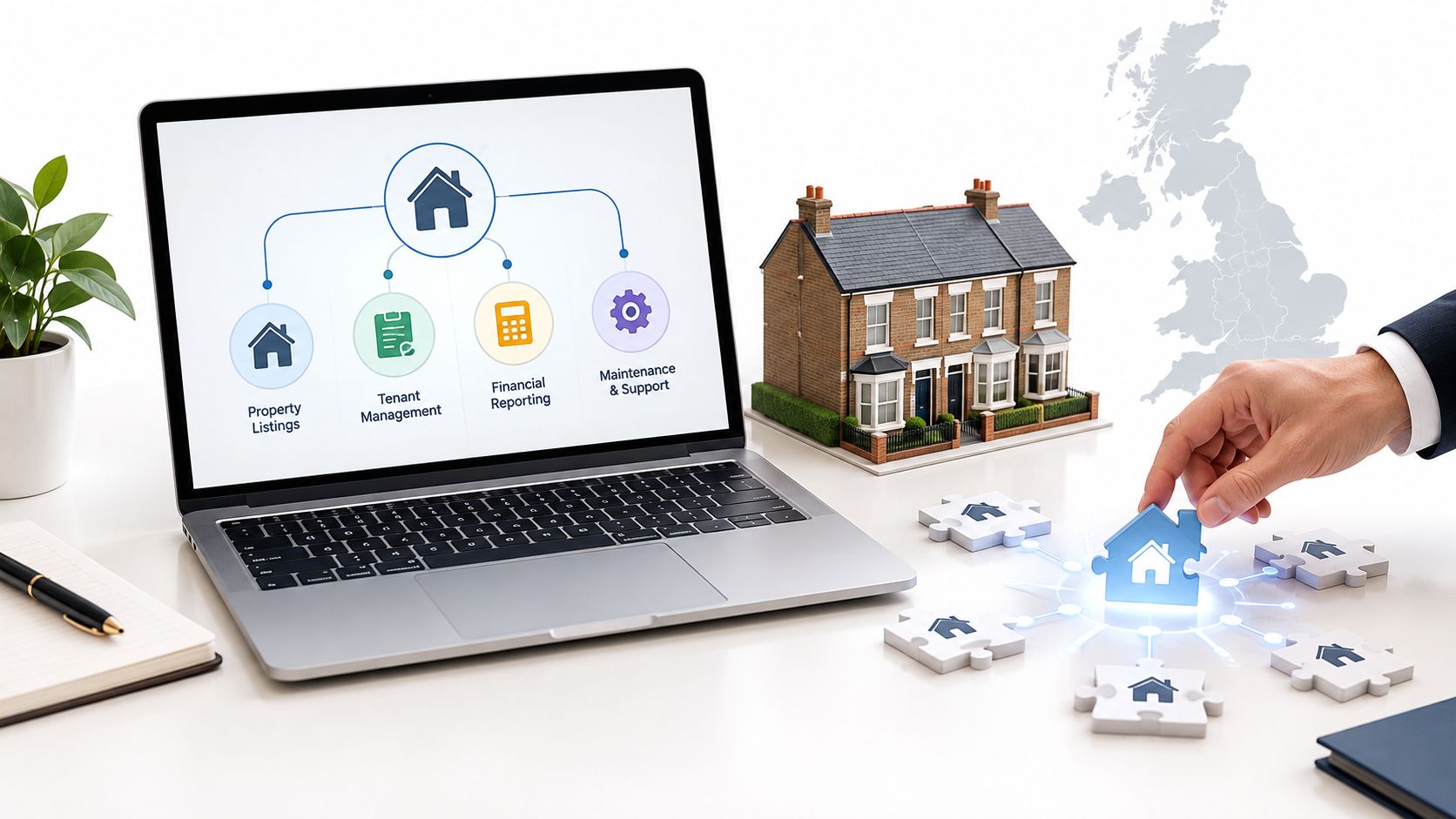
Tuesday morning starts with the shared inbox full of tenant messages from Monday evening. A certificate renewal is sitting on the wall planner with nobody clear on who checked it, while a void, a tenancy progression issue and a maintenance request are all competing for the same person's attention. The tenant who messaged at 8pm got an answer at 9am, because the process only moves when someone remembers it.
I'm Cameron Atwal, founder of InnovaAI Integration Ltd in Wolverhampton. I run a property portfolio myself, and I've personally done the admin I now automate for letting agents, block and estate managing agents, and serviced accommodation operators across the West Midlands and the UK.
Table of Contents
- Why Does the Tuesday Morning Backlog Never Shrink?
- What Does Custom Software Development Actually Mean for Property Firms?
- Why Do Most Property Firms Consider Custom Builds but Choose Elsewhere?
- How Does a Property-Focused Custom Build Actually Work?
- What Drives the Cost of UK Property Software and Compliance Work?
- How Can You Select a Provider That Fits Your Operation?
Why Does the Tuesday Morning Backlog Never Shrink?

The usual explanation is that the team is busy. That's true, but it doesn't explain why the same backlog returns every week. The deeper problem is that information is moving between people, inboxes and platforms without a dependable process controlling the handoff.
Reapit, Alto, Fixflo, Arthur and Qube can each handle important parts of property operations. The gaps appear around them. A maintenance request needs checking, categorising and assigning. A certificate needs linking to the right unit and deadline. A landlord update needs drafting from current information, then reviewing before it goes out.
Practical rule: If a task depends on memory, a shared spreadsheet or a wall planner, it isn't controlled by the business yet.
That creates mechanical costs. Someone reads the same message twice. Someone copies a reference from one platform into another. A manager chases an update that should have appeared automatically. A compliance check is delayed because the person responsible is dealing with a void or an urgent repair.
The answer isn't to chase the team harder. It's to make the process visible, repeatable and connected. Custom software development in the UK property sector is useful when it removes those operational gaps, not when it adds another dashboard that nobody opens.
I've seen firms consider a new tool because their existing systems don't talk to each other. Often, the better answer is to connect the systems already paid for and put a clear approval step around the decisions that still need a human.
This short video shows the type of practical thinking that should come before any build.
What Does Custom Software Development Actually Mean for Property Firms?
Custom software doesn't usually mean replacing your property management platform. It means building the missing layer around it.
Think of a bespoke joiner fitting shelves into an awkward loft space. They work around the shape of the house. They don't demolish it and ask you to move out while they build a new one. A useful property system does the same with Reapit, Alto, Fixflo, Arthur or Qube.
It might collect maintenance information from Fixflo, check the property and tenancy record, route the request to the right person, and place a draft response in front of a team member. It might bring certificate renewals, service charge information and tenancy progression into one working view.
The UK software development sector has substantial supplier capacity. IBISWorld estimates the UK software developers industry at £51.0bn in 2026, with 29,925 businesses operating in the sector. That doesn't mean every supplier understands property operations. It does mean a firm doesn't need to treat bespoke development as an unusual technical experiment.
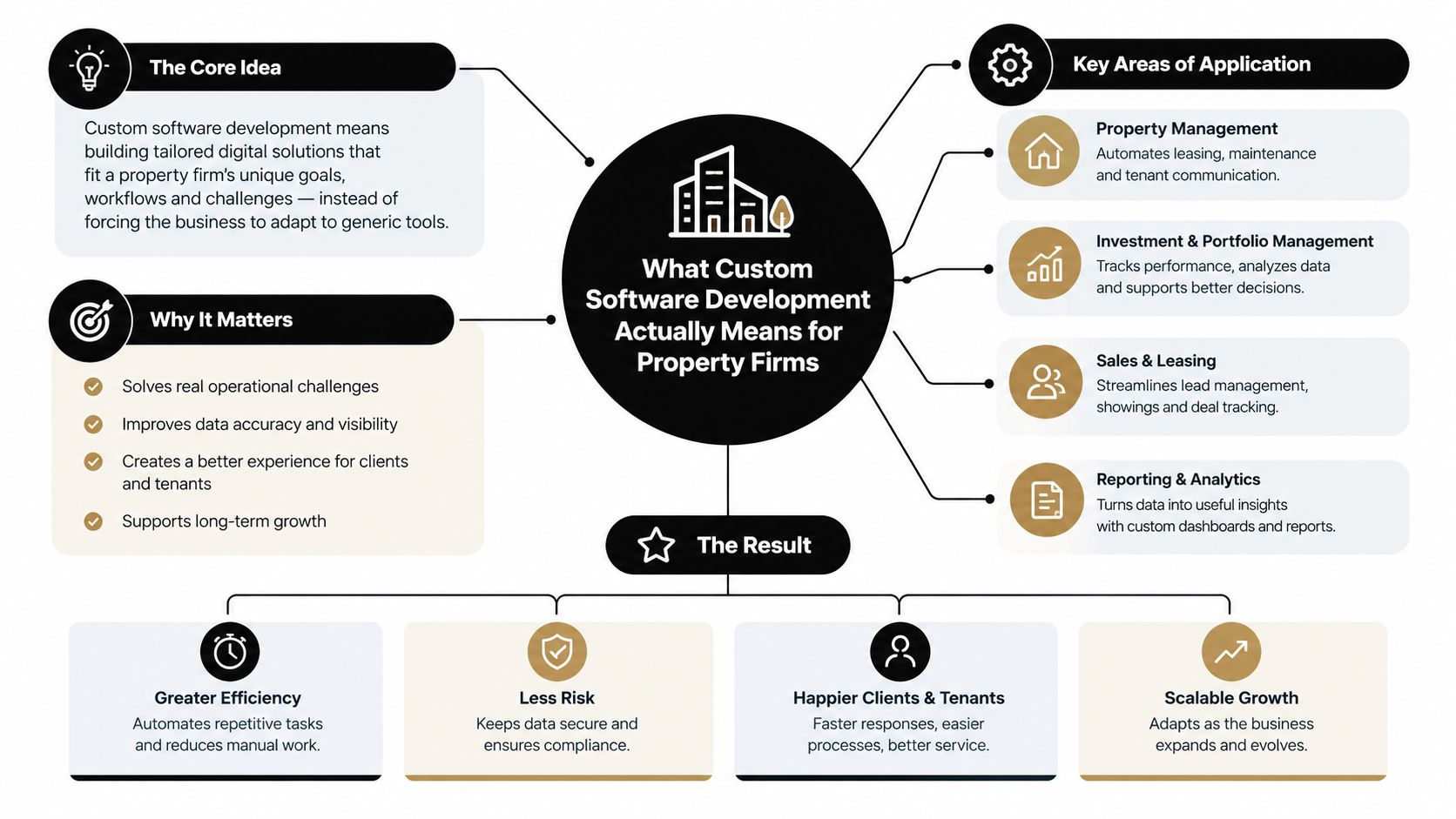
The UK custom software segment is also forecast to expand materially, from US$1,926.2 million in 2024 to US$5,804.0 million by 2030, according to Grand View Research's UK custom software development outlook. The relevant point for a property operator isn't the market label. It's that workflow automation, integrations, dashboards and internal apps are established forms of software delivery.
AI may help classify a maintenance message or prepare a draft. It's still only one component. The working system needs data connections, permissions, clear ownership, testing, training and human approval before anything reaches a tenant, landlord or regulator.
Why Do Most Property Firms Consider Custom Builds but Choose Elsewhere?
Four alternatives usually appear before a bespoke build.
Doing nothing feels safest because the current process is familiar. It also preserves every manual handoff. The shared inbox remains the queue, the spreadsheet remains the unofficial system, and the person who knows the process remains a single point of failure.
Hiring another member of staff can be sensible when volume demands more capacity. It isn't a substitute for fixing a process that makes people re-key information or chase updates. A new hire may just inherit the same backlog and learn the same workarounds.
Switching platform can work when the current product is unsuitable. It's a major operational decision, though. Data migration, retraining, integrations and user adoption all create disruption. Moving from Alto to another platform won't automatically fix a certificate workflow that has never been mapped properly.
Using ChatGPT can help an individual draft a message, summarise notes or organise information. It isn't a controlled system of record. It won't know whether a draft landlord update is accurate unless the right information is supplied, and it shouldn't make an unreviewed decision about a tenant, a regulator or a compliance matter.
The blocker is often operational readiness, not build versus buy. The SME Digital Adoption Taskforce update identifies financial barriers, a lack of trusted guidance and fragmented support as major obstacles to adopting technology.
That matches what I see in property firms. The software gets purchased, but nobody agrees which process changes, who owns the exceptions, or how staff will use the new workflow on a difficult Monday.
A sensible build starts with one recurring bottleneck. Document the current process, remove unnecessary steps, connect the relevant platforms, and train the people who will use it. The practical guide to business process automation software is useful for checking whether the problem is suitable for automation before discussing a build.
How Does a Property-Focused Custom Build Actually Work?
A property build should start with the work, not the technology. I want to see the inbox, the spreadsheet, the compliance calendar and the existing platform before discussing features.
The process normally looks like this:
Map one workflow: Follow a real maintenance request, certificate renewal, void or tenancy progression case from arrival to completion. Record every person, platform, decision and exception involved.
Define the outcome: Decide what the system must surface, prepare or route. “Improve maintenance” is too broad. “Send complete repair information to the right person for review” is workable.
Check the source data: Confirm what Reapit, Alto, Fixflo, Arthur or Qube can provide through an API, export or approved data feed. The build should use existing records rather than create a competing database without a reason.
Connect the systems: Build the required integration so information can move between the inbox, property platform, maintenance tool, calendar or reporting view. API integration explained in plain English is a useful starting point for understanding this layer.
Add the decision rules: A maintenance message can be categorised and routed. A tenancy progression check can flag a possible Section 20 issue. A certificate calendar can identify a renewal approaching its internal review date.
Put approval in the workflow: A team member reviews any response before it reaches a tenant or landlord. A qualified or designated person checks anything intended for a regulator. The system prepares and highlights, but it doesn't make legal decisions.
Test difficult cases: Use incomplete addresses, duplicate messages, urgent repairs, missing certificates and conflicting records. A system that only works on the tidy example isn't ready for a live portfolio.
Train and release in stages: Give the team a clear operating procedure, test with a small group, collect issues, then expand. Training should be part of the build, not an optional extra after launch.

The platform remains the place where the official property record is managed. The custom layer makes the surrounding work more consistent. It can show the next action, prepare information and alert the person who must make the final call.
What Drives the Cost of UK Property Software and Compliance Work?
Cost is driven by operational depth, not by how many buttons appear on a screen.
A small internal view connected to one dependable data source is different from a workflow that joins Reapit, Fixflo, an inbox, a document store and a reporting system. Each connection needs testing, error handling and permission rules. The number of approval paths also matters. A draft tenant reply is not handled in the same way as a client money report or a message intended for a regulator.
Data governance affects the work as well. You need to know what information is stored, who can see it, how long it is retained and where it is hosted. Those decisions should reflect the firm's actual operations and the requirements that apply in England and Wales.
Client money, service charge calculations, certificate renewals and Section 20 activity all need careful handling. A system can flag a missing step, assemble relevant records or remind the team to review a date. It must not be presented as a substitute for legal advice or professional judgement. A solicitor or compliance adviser should confirm how a requirement applies to your firm and portfolio.
Compliance belongs in the design brief. It shouldn't be added after the first workflow has already shipped.
The Department for Business and Trade created the SME Digital Adoption Taskforce in April 2024 to support adoption of cloud computing, customer relationship management and resource planning software. Its final report cites earlier Enterprise Research Centre work showing firm-level productivity improvements of 7% to 18% per technology, depending on the product adopted.
That figure isn't a promise about a custom property build. It does show why the workflow matters more than the label on the software. The right tool in the wrong process produces another login. The right tool, connected to a clearly owned process, can remove repeated handling and make exceptions visible.
How Can You Select a Provider That Fits Your Operation?
Start with the process, not the product. A suitable provider should review how your team handles work today, understand the platforms already in use, and explain which connections are practical. They should also discuss system integration software, including what can be connected and where manual approval must remain.
Look for evidence of:
A working-system approach: They build and connect operational tools, rather than supplying strategy documents or generic demonstrations.
Clear scoping: You receive a fixed-price proposal after workflows, integrations, data requirements and approval points are defined.
Training with the build: Staff learn what changes in daily work, how to handle exceptions and when to stop an automation.
A maintenance plan: Someone monitors connections, updates workflows and responds when platform changes affect them.
The confidence to say no: If Reapit, Alto, Fixflo, Arthur or Qube already solves the problem, use its standard feature. Custom work must earn its place.
The self-serve AI Readiness Scorecard can help you list recurring administration, manual handoffs and suitable opportunities before speaking to a provider. It organises the problem and establishes a baseline, but it does not replace process discovery.
For a letting agency, begin with the tasks that consume Tuesday mornings, compliance dates managed from memory and handoffs between the inbox, property platform and maintenance system. Those details reveal whether the team is ready to adopt a change.
InnovaAI Integration Ltd builds custom AI systems, workflow automations, dashboards and internal software that connect to existing property platforms, with training and human approval included. Visit InnovaAI Integration Ltd for a free discovery call to assess whether it fits. If it does not, the team will say so.