Custom AI Agent Development for Property Firms
custom ai agent developmentproperty automationai integrationletting agentsblock management
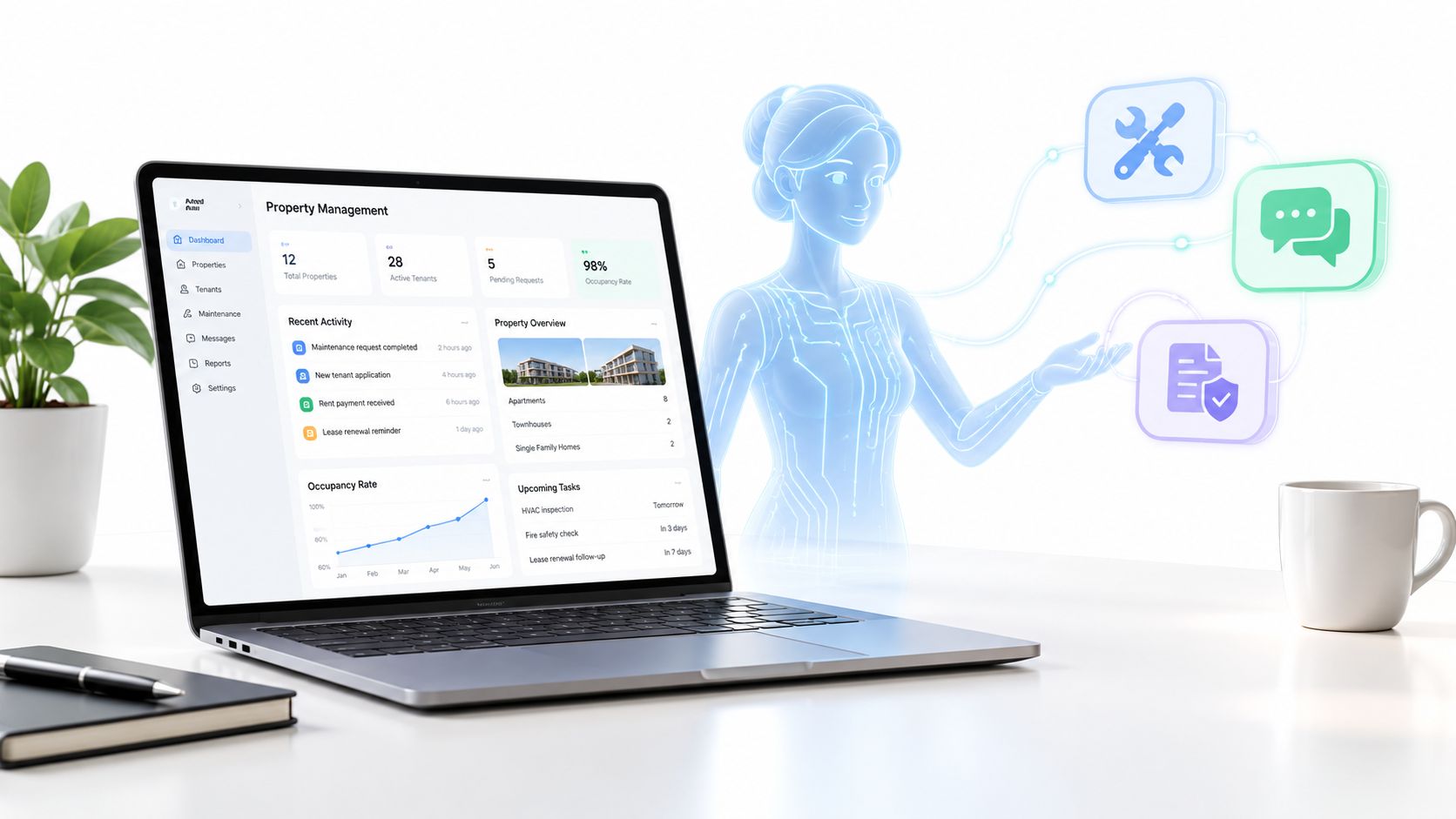
Tuesday morning starts with the shared inbox already full. Three tenant messages arrived at 8pm, a gas certificate renewal is still marked on the wall planner, and someone is copying void information from a spreadsheet into Reapit. Nobody is idle. The process is making good people repeat the same checks across different places.
That's the property-operations problem custom AI agent development should address. Not replacing Reapit, Alto, Fixflo, Arthur or Qube, and not handing legal decisions to a chatbot. The useful build sits between the systems you already pay for, gathers the right information, prepares the next action and leaves a person in control before anything reaches a tenant, landlord or regulator.
Table of Contents
- Why Your Tuesday Morning Backlog Needs a Custom Build
- Scoping the Workflows That Actually Cost You Money
- Building Agents That Connect to Your Existing Stack
- Navigating UK Compliance and Data Governance
- Where to Start in Your Own Operation
Why Your Tuesday Morning Backlog Needs a Custom Build
The backlog usually isn't caused by a lack of effort. It's caused by work arriving in one system, being checked against another and then being recorded somewhere else for visibility.
A maintenance request may enter Fixflo, while the tenancy details sit in Alto. A certificate date might be held in Reapit, but the team watches a spreadsheet because the spreadsheet is easier to scan. A block manager may have consultation documents in Qube, email threads in Outlook and approval notes in a shared folder.
Every hand-off creates another opportunity to miss context. The team reads the same message, finds the same property record and rewrites the same response. The cost is mechanical. More inbox handling, slower tenancy progression, delayed maintenance triage and more management time spent checking whether a task was closed.
Practical rule: If a task crosses systems and follows repeatable rules, map it before you hire around it.
Hiring another administrator can increase capacity, but it also adds another person to the same fragmented process. Switching platforms may remove one problem while creating migration work, retraining and new gaps around the features your team already understands. Generic ChatGPT can draft a reply, but it won't know which unit is affected, whether the contractor is approved or where the final record belongs unless someone supplies that context every time.
A custom build works differently. It connects to the records already held in your stack, applies your operating rules and prepares a controlled action for review. That's particularly relevant for letting agents managing recurring fees, compliance dates and tenant communications across a growing portfolio.
The market is moving from casual experimentation into operational use. The Office for National Statistics reports that the share of UK businesses with 10 or more employees using at least one AI technology rose from around 12% in September 2023 to just under 35% by June 2026. The practical question for a property owner isn't whether the technology exists. It's whether one narrow workflow can be made dependable enough to carry part of the daily load.
Scoping the Workflows That Actually Cost You Money
Start with the work your team repeats, not the task that sounds most impressive.
Take the last working week and list every process that involved copying, checking, classifying or drafting. Include the exceptions. Tenancy progression, maintenance triage, certificate renewals, void updates, service-charge queries and Section 20 consultation administration are all candidates, but they don't carry the same risk or integration difficulty.
Map the hand-offs
For each workflow, write down:
- Trigger: What arrives first, such as a Fixflo request, an email or an expiring certificate.
- Records: Which details must be found in Reapit, Alto, Arthur or Qube.
- Rules: What your team checks before assigning, escalating or replying.
- Output: What gets drafted, updated, scheduled or placed in a review queue.
- Approval: Which person must inspect and approve the action.
- Exception: What should stop the process and return to a human.
This exposes the friction. A maintenance request might look like one ticket, but the team may need to identify the property, check the tenancy, classify urgency, confirm responsibility, select a contractor and draft a message. A system can assist with those steps without taking ownership of the legal or commercial judgement.
Choose the first workflow carefully
The strongest starting point is repetitive, bounded and visible. It should have a clear source record, a known destination and an approval rule that a senior administrator can explain without opening a manual.
Avoid starting with “manage the whole tenancy” or “run block compliance”. Those descriptions hide too many decisions. Begin with something such as preparing a maintenance summary, identifying missing information in a tenancy progression file or moving approved void data into the channel manager.
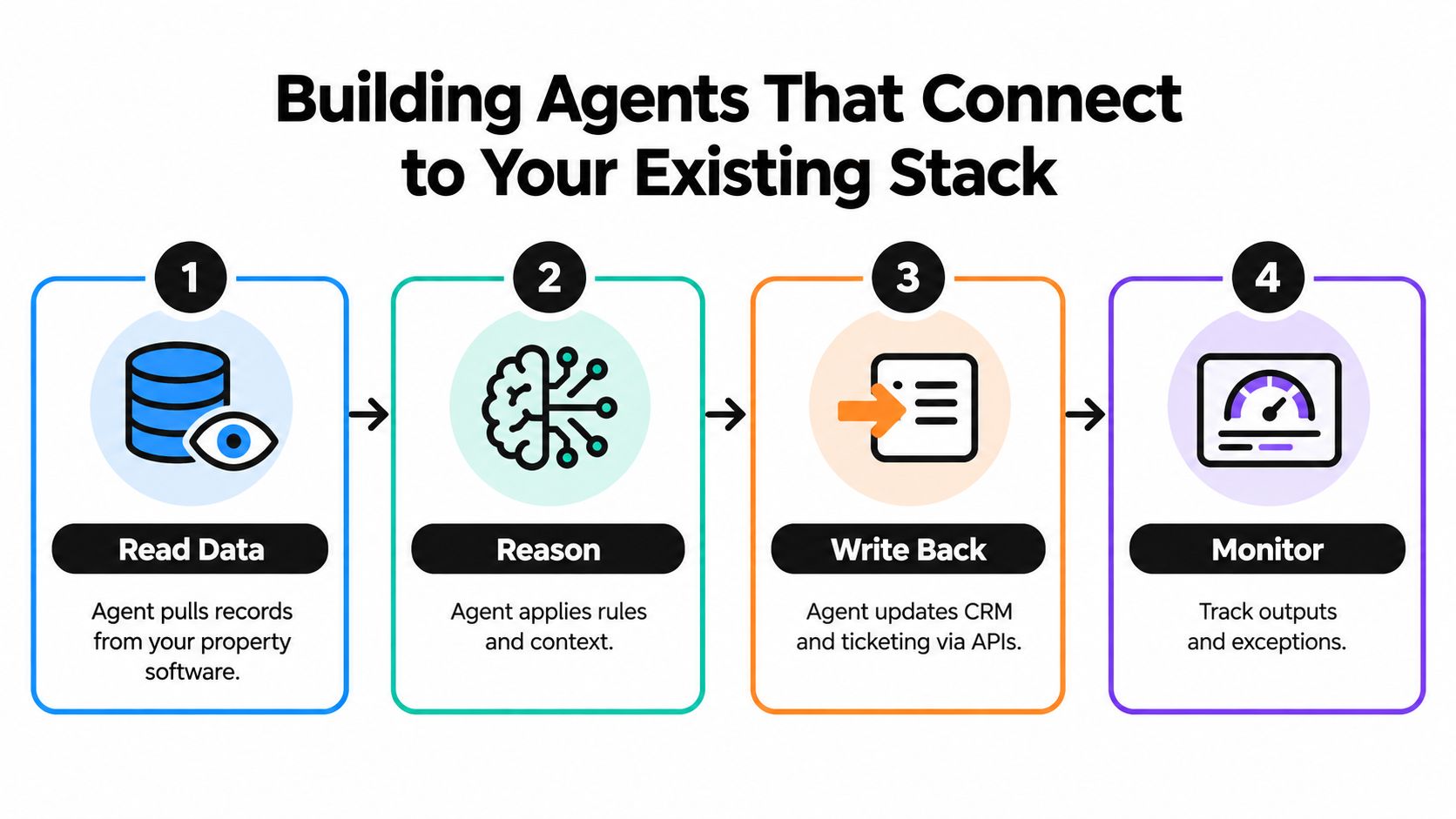
The system should connect to what you already run, not replace it. Your property software remains the system of record. The agent reads approved data, reasons against your rules, writes a draft or structured update and records what happened.
Building Agents That Connect to Your Existing Stack
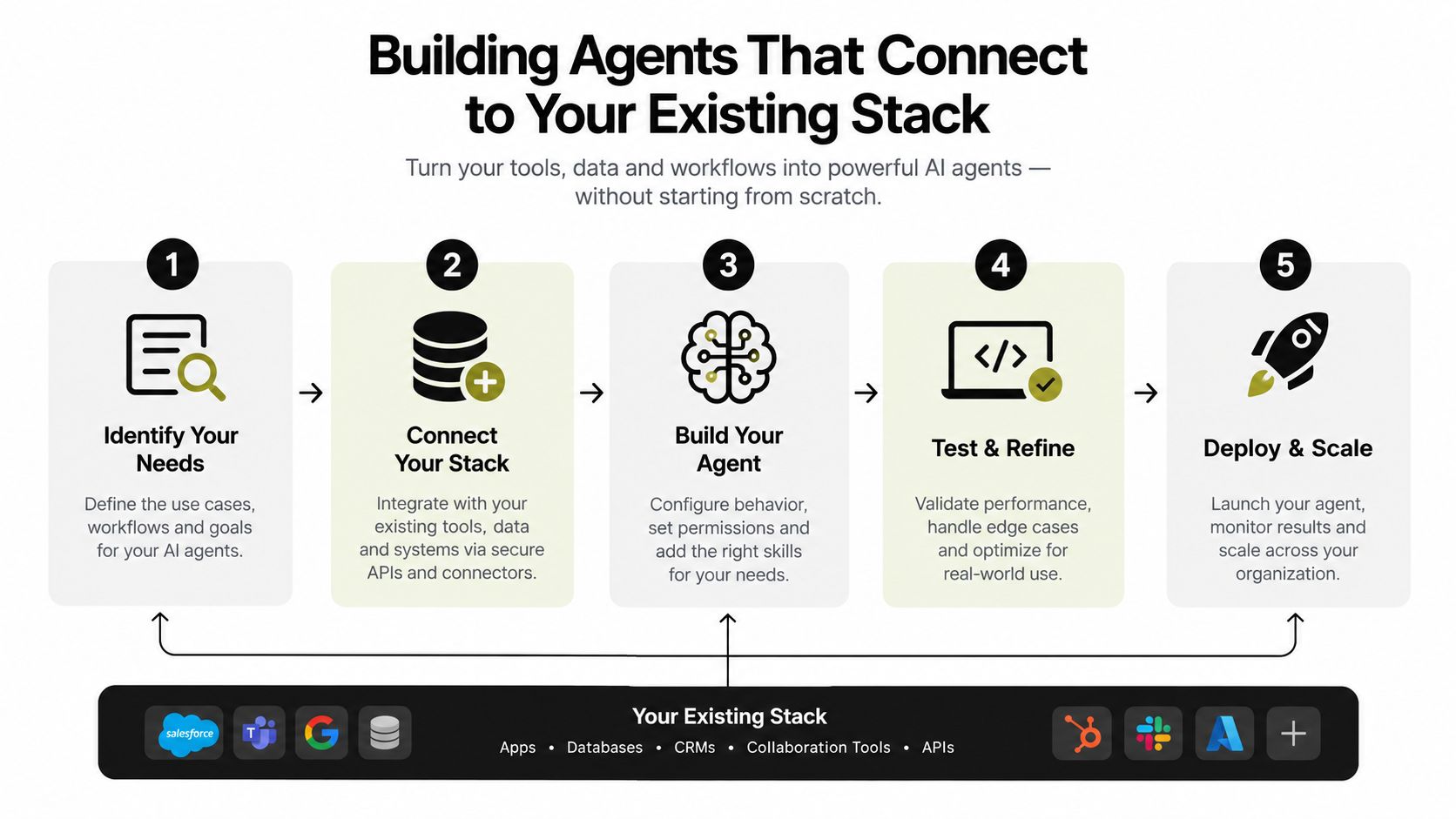
A practical build starts with permissions and data paths, not a long prompt.
An agent may read a new Fixflo request, retrieve the related property and tenancy details, apply your maintenance categories, then prepare a work-order recommendation. It can draft a tenant message that explains the next step, identify missing photographs or access information and place the item in a review queue.
The connection matters because the agent needs the current record, not a pasted summary. Through the available API or integration route, it can read from the tools you already use and write structured information back to the appropriate record. The technical principle is explained clearly in this guide to API integration.
A controlled maintenance example
A Fixflo workflow could run like this:
- Read the request: Capture the description, photographs, property reference, tenant details and submission time.
- Find context: Retrieve the relevant tenancy, landlord instructions, previous tickets and contractor information from connected systems.
- Classify the issue: Suggest a category, urgency and likely next action using your agreed rules.
- Prepare the record: Draft the work order, identify missing information and propose a tenant response.
- Request approval: Show the recommendation and source details to a named team member.
- Write back: Only after approval, update the ticket or create the next record through the permitted connection.
- Monitor exceptions: Flag unclear responsibility, incomplete data, unusual wording or anything outside the agreed scope.
The agent must not send the tenant message automatically. A human clicks approve before communication reaches the tenant, landlord or regulator. The same applies to a contractor instruction, a certificate escalation, a Section 20 notice workflow or any record that could create a legal or financial consequence.
That approval step isn't decoration. It gives the operator a chance to catch a wrong property match, an incomplete request or a rule that doesn't fit the circumstances. It also creates a review trail showing what the system proposed and who authorised the action.
The sensible design is therefore not “AI runs maintenance”. It's “AI prepares the next decision, with the existing platform holding the record and a qualified person approving the outcome”.
Navigating UK Compliance and Data Governance
Property firms handle personal data as part of ordinary operations. Tenant names, contact details, correspondence, access arrangements, landlord instructions and staff notes may all appear in the records an agent needs to process.
The Information Commissioner's Office explains that UK data protection law is technology-neutral. It still applies when personal data is used to train, test or deploy AI systems. Where processing is likely to result in high risk to individuals, Article 35 GDPR requires a Data Protection Impact Assessment.
That has a direct operational consequence. Before connecting an inbox or property platform, decide what data the agent needs, what it must not see, where outputs are stored and who can approve them. Don't give a maintenance triage workflow unrestricted access to every landlord record just because the integration makes it technically possible.
Put governance into the workflow
Governance should include:
- Access control: Give the agent only the records and actions required for its defined job.
- Approval ownership: Name the person responsible for tenant, landlord and regulator-facing decisions.
- Audit records: Keep the source information, proposed action, approval and final update together.
- Exception handling: Stop processing when records conflict, information is missing or the request falls outside scope.
- Monitoring: Review rejected drafts, incorrect classifications and repeated exceptions so the workflow can be improved.
The practical guidance on AI agent governance should sit alongside your existing compliance procedures, not in a separate technical document that nobody opens.
The National Audit Office found that 67% of surveyed bodies cited legal-liability uncertainty, 57% cited inaccurate-output risk, and 70% were only piloting or planning AI use in the public sector context covered by its review. Those findings point to the actual control problem, but they do not remove the need for property-specific judgement. A solicitor or compliance adviser should confirm how data protection, client money, automated decision-making and relevant England and Wales requirements apply to your workflows.
An agent can identify an approaching certificate renewal or missing document. It must not decide that a property is legally compliant, approve client-money movements or replace advice from Propertymark, ARLA, IRPM, RICS, a solicitor or your compliance adviser.
Where to Start in Your Own Operation
Look for the single administrative task that crosses between two systems and happens often enough that everyone knows its steps.
It might be copying void details from a spreadsheet into a channel manager. It could be checking a certificate date in one place, sending an internal reminder from another and recording the response in a third. In serviced accommodation, it may be turning booking and maintenance information into a controlled turnaround list.
Write down the current route without improving it first. Record who touches the task, which systems they open, what information they copy, where delays occur and which decisions require experience. Then separate mechanical preparation from professional judgement.
The first build should usually handle the mechanical preparation. It can collect records, identify missing fields, draft the internal summary and place the work in front of the right person. It shouldn't make the final compliance, legal, financial or external communication decision.
Use the AI Readiness Scorecard as a tool to baseline the process and compare possible starting points. If the workflow has no reliable source record, no agreed rule or no clear owner, fix that process first. Custom AI agent development won't tidy up an operation where nobody agrees what “complete” means.
For a practical technical overview, see how to build AI agents around real workflows. The useful test is simple: can the proposed system connect to your current stack, show its working, stop for approval and leave a clear record?
InnovaAI Integration Ltd builds custom AI agents that connect with platforms such as Reapit, Alto and Fixflo, helping property teams prepare and route repetitive operational work without replacing their existing systems. Visit InnovaAI Integration Ltd for a free discovery call to work out whether it fits your portfolio, and if it isn't a fit, I'll say so on the call.